



By Nathan Miller
Nathan Miller is a guest contributor as a part of an invitation to readers and writers to submit material. You can find his other post on Darren McFadden here.
First-ballot Hall of Famer. Sounds ridiculous? Well it should. Griffin has ridden a wave of excitement into the league and expectations are stratospheric thanks to the deafening sound of RG3 Groupies.
Some argued that he was the better choice than Andrew Luck in the NFL Draft. Others felt he was trying too hard to earn this No.1 overall pick and questioned his true intentions. They talk about Griffin’s football intelligence, his athletic prowess, and game-changing ability. Although Griffin has rewarded many fantasy owners who drafted him in the mid-rounds of their summer drafts, there is more to a quarterback’s game than great athleticism. Ask Michael Vick, Vince Young, Cam Newton, Steve Young, John Elway, and Terry Bradshaw.
It would be arrogant to not recognize his gifts as an athlete, and an inspiring captain of his offense. Robert Griffin has demonstrated that he is capable of playing at the highest level. He is an accurate passer, an intelligent player, and a super-human athlete. He will likely graduate into the company of elite players in the future, but only after honing his skills at the highest level and upon closer evaluation, this might take longer than many think.
The reason for the longer time frame is a two-fold question where the answers might prove troublesome: Can Griffin stay healthy long enough to realize his potential and can he correct a tendency to tip his hand to the defense?
Taking Unnecessary Hits
This is the most talked-about and obvious of Griffin’s flaws. Fortunately, it’s also the easiest to fix. Many hope his recent concussion knocked sense into him. He had previous stated that his aggressive running was part of his game, but he’s no good to Washington in a catatonic state.
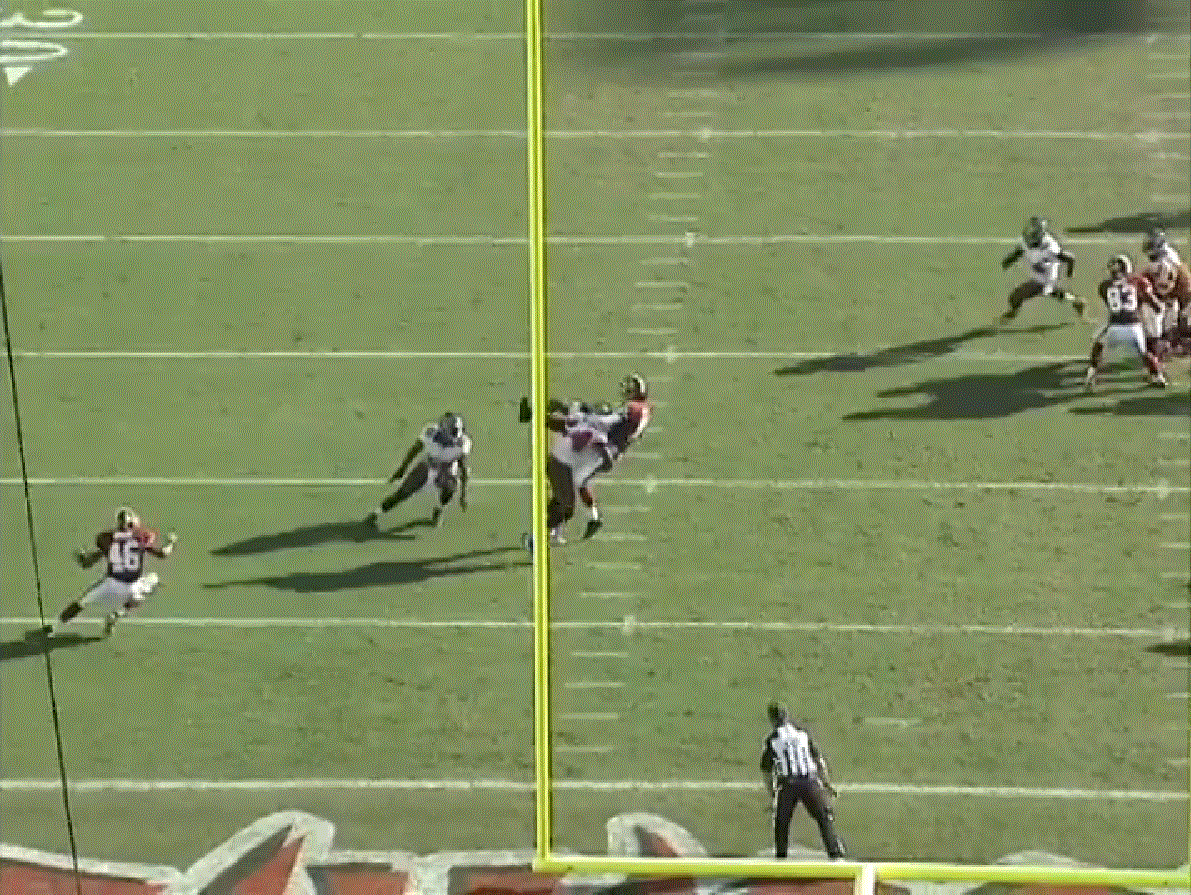
Griffin takes the ball to end and he needs to do a better job of protecting the ball and himself. He has to remember to get down so he can play another down. On the plus side, safety Mark Barron gets a great opportunity to showcase his best “Hacksaw” Jim Duggan impression.
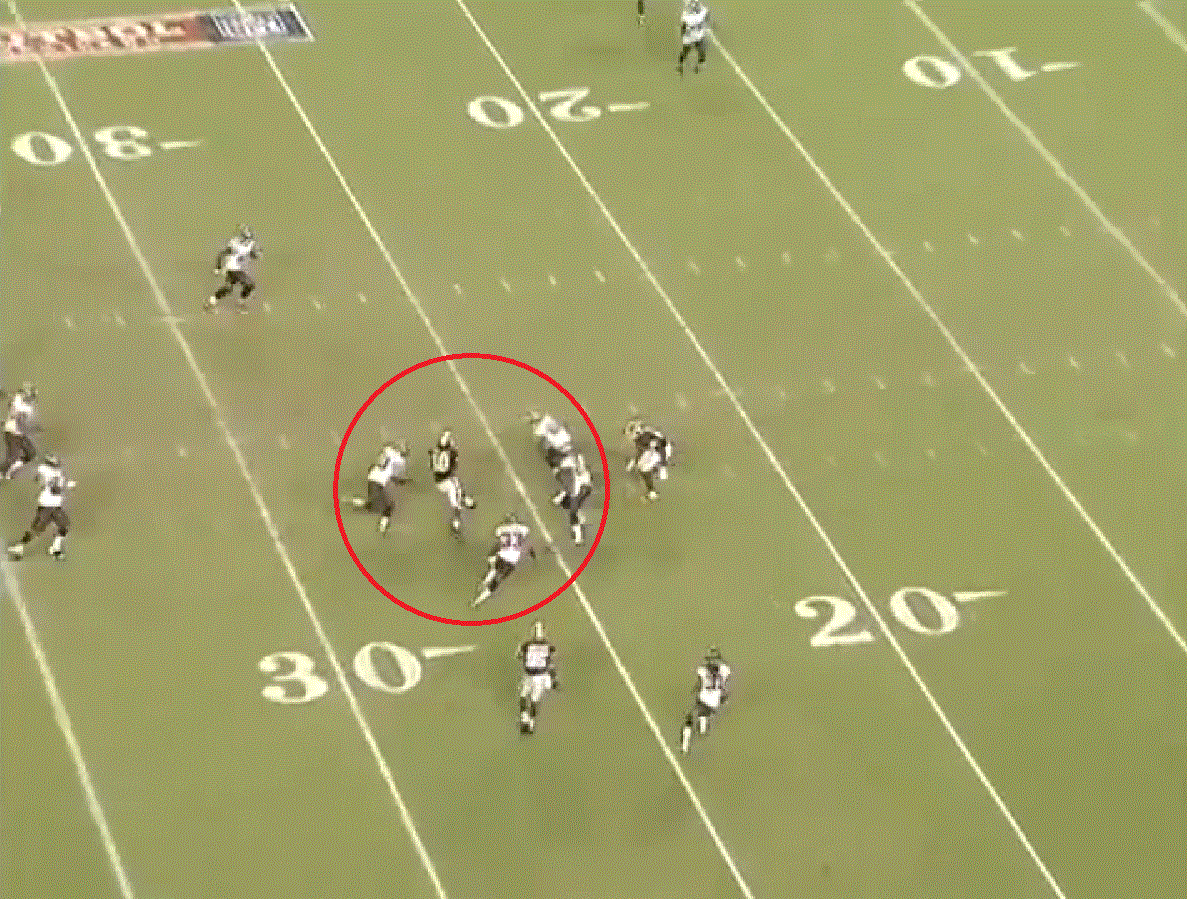
In a play that leaves one shaking their head the Redskins are down by one with 0:46 left in the game on a 2nd-and-six where Griffin runs for 15 yards. He reaches field goal range but instead of sliding to end the play, he continues running at full speed into a herd of defenders. He gets crushed unnecessarily and risks injury and/or a potential turnover.
Most young quarterbacks try too hard to be the hero, but we know that these players aren’t so insulated from each other that they don’t see their peers or predecessors taking vicious punishment and losing weeks, months, and years to their careers. The problem is an immaturity that comes from being young, feeling impenetrable, and having an ego that needs to be held in check. Tom Coughlin’s decision to bench former Virginia Tech star David Wilson might be the best thing that happened in the running back’s young career, because he realized that he wasn’t above the team. This is the same thing that Vernon Davis learned with Mike Singletary benched him.
Having an ego is healthy, but there are many ways that players with special gifts behave as if they are above the team. Sometimes it’s arrogance in the form of calling undue attention to them as individuals. Other times, it’s about the arrogance of placing oneself in dangerous situations. There’s a balance that needs to be learned for players like Griffin.
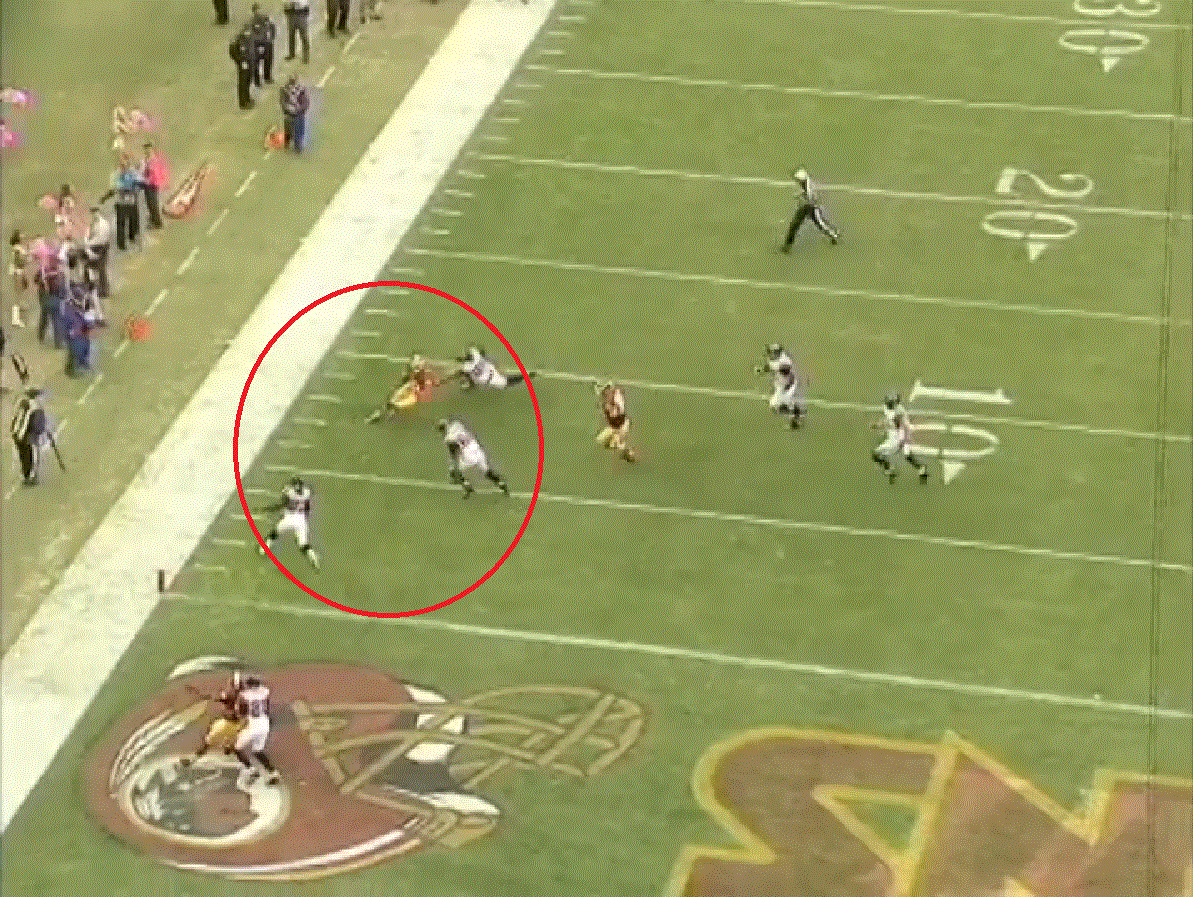
Here is the infamous “mild concussion” hit. It is a 3rd-and-four and he is nowhere near the end zone. I could maybe rationalize this one if he was at the goal line and within scoring range, but this play is over from the snap. The receivers are well covered and force Griffin to run, which ultimately results in a loss of yards and a temporary state of confusion for the rookie.
Pre-Snap Tell
What I have noticed from Weeks 3-5 is that once a defense becomes aware of his patterns, it could easily distinguish with some degree of accuracy where the ball is going before it is even snapped. I neglected his first two games when focusing on this tendency, because I wanted to give him time to get up to speed before critiquing him. However, there are formations and situations on passing downs where there’s a high degree of certainly a defense can tell which side of the field the ball is going. Moreover, there is only one receiver on that side of the field, which often pinpoints the exact destination.
His typical routine often includes a quick view of the immediate line. This is to be disregarded. However, he will blatantly stare at the hot receiver and this could get brutal for him going forward if it continues.
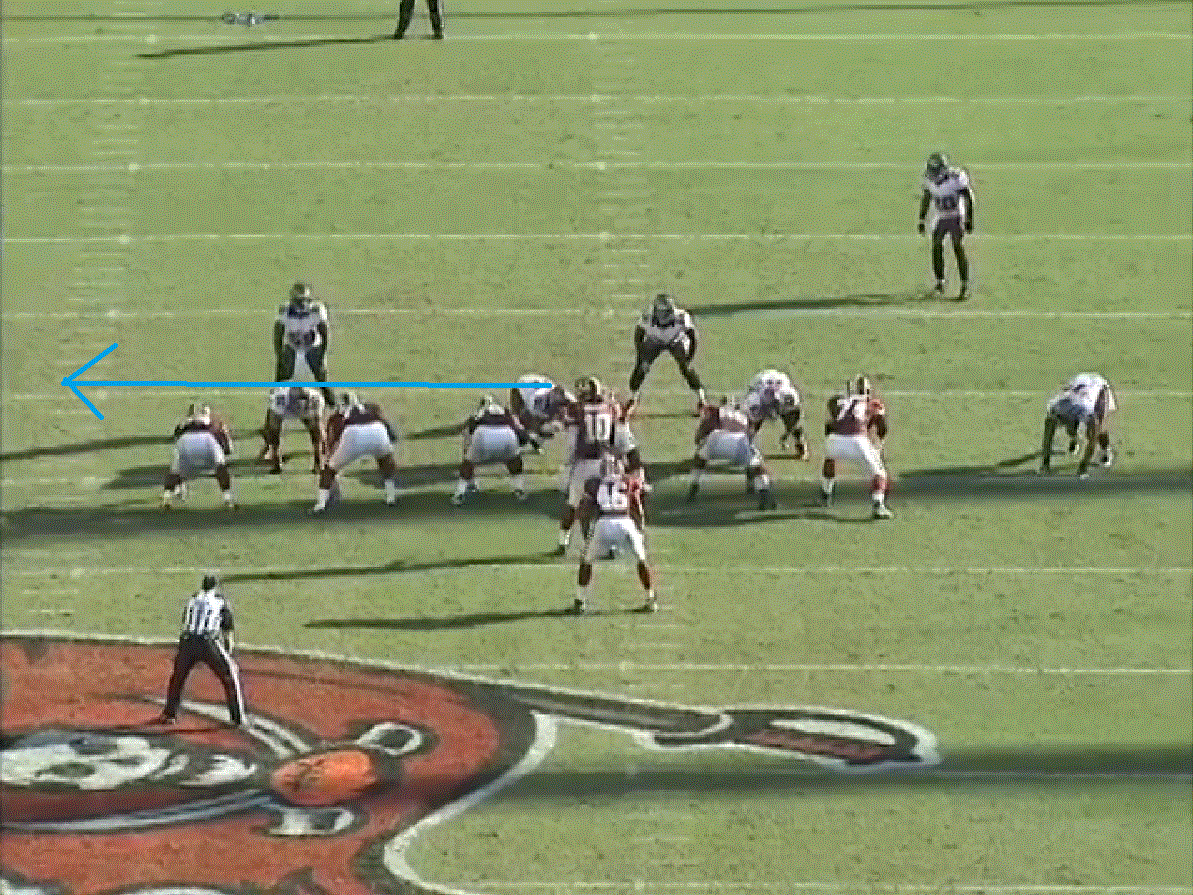
Here is a prime example: Shotgun formation and the line settles in. He walks into position, looks directly to his left, glances at the line, and the ball is snapped. He takes a three-step drop, all the while staring directly at his intended receiver to the left for several seconds before finally throwing to him.
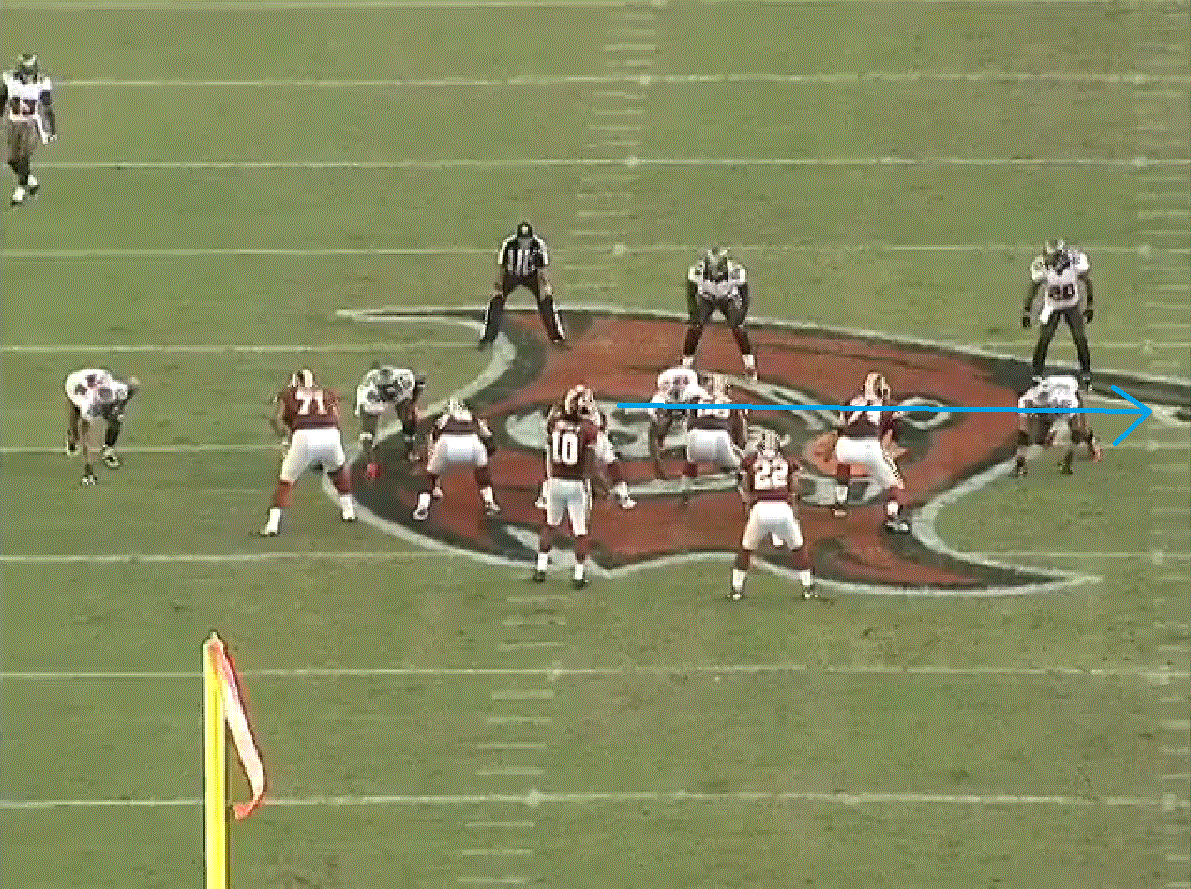
Again, walks to his position, looks only to the single receiver on the right side of the play, and then takes the snap. He then proceeds to stare the receiver down and throw.
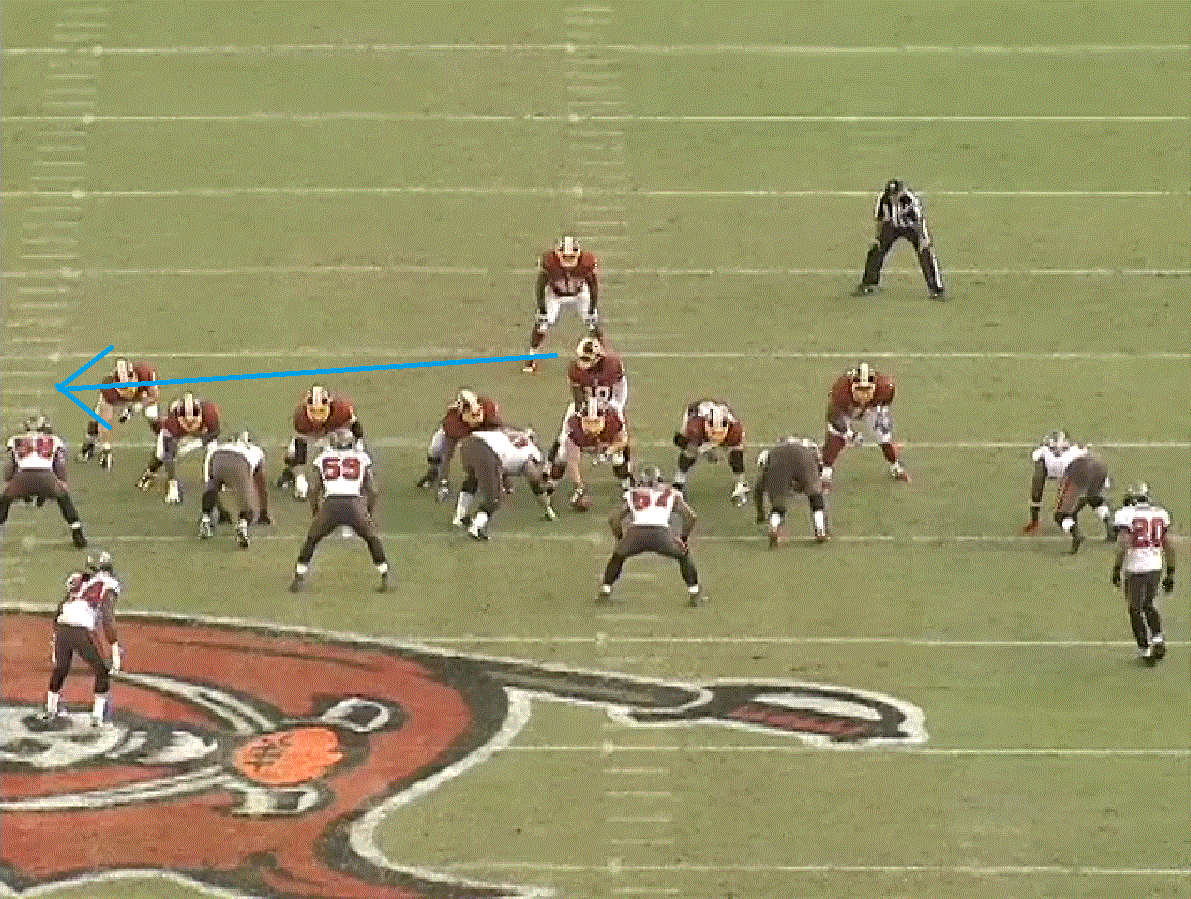
Single-back formation. Griffin glances at the line on his way to center. Once under center, he looks to the right, does his cadence, takes the snap, stares down the only receiver on the strong side, and then delivers the ball. In this case there are two tight ends on the strong side, and one could pose the argument that although indicating the play side, it was a 33 percent chance of success to target one receiver. However, although one cannot tell conclusively based on the footage, I would put several George Washington’s down on the fact that he was likely staring at the receiver. As I will illustrate shortly, it’s what he does best. Also, one of the tight ends stays to block, increasing the probability of a correct guess.
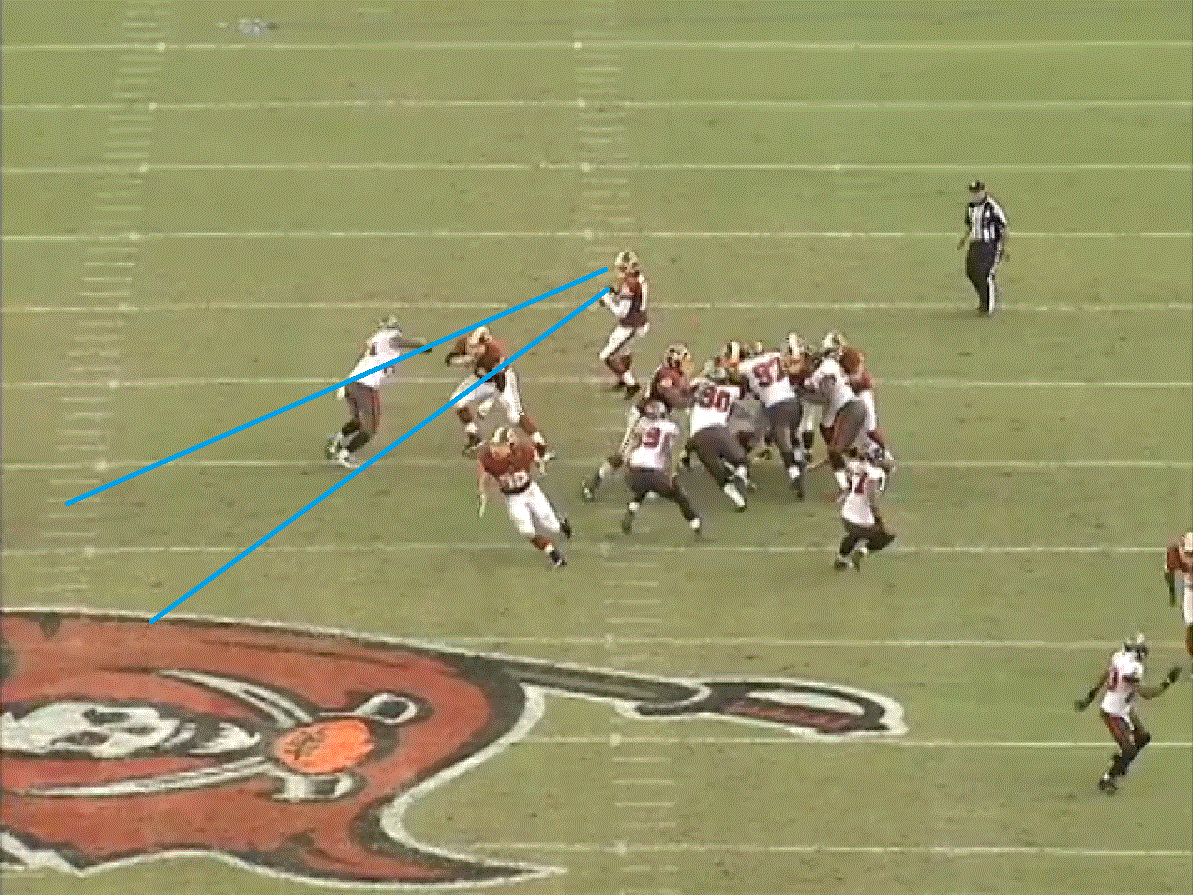
The next thing the defense sees is him staring down his receiver. It’s a pretty obvious statement to where he’s going.
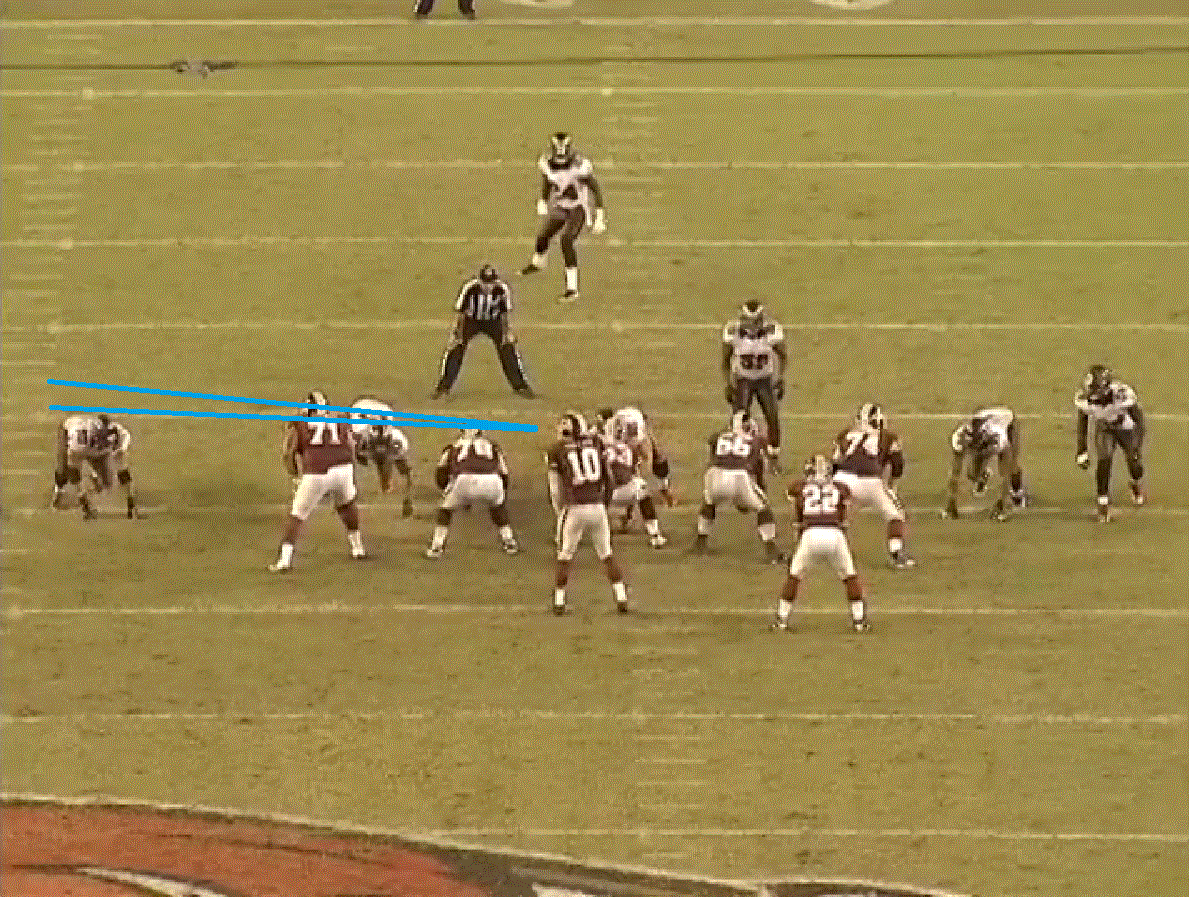
Shotgun formation: Griffin glances at the line (stop me if you’ve heard this before) and looks only to his weak side which contains a single receiver. He then proceeds to wink at, blow kisses to, and high-five the intended receiver before taking the snap, staring him down, and delivering the ball. One can only assume that after seeing this repeatedly, that defenses will begin to connect the dots, and will do so at a maddening pace.
Tunnel Vision
In the progression of problems, RG3’s tunnel vision goes hand-in-hand with pre-snap tells. At this point of his pro career, Griffin has absolutely no ability to look off defenders. Some of this may be part of the Shanihanigans of simplifying the game plan for Griffin. However, it goes much further beyond that.
Thus far, I rarely saw him go beyond a second read. In the rare instances he did go to a second read, it was typically a check-down to his back. Even more uncommon was a throw to another receiver in the area as the first read.
Griffin does have his own process of “looking off defenders.” His version has two faces:
- The first usually involves him staring blankly into the center of the field. Defenders at this point may cue in on a tight end or slot receiver. Usually there is an outside receiver running a crossing pattern that will arrive in the area he is looking at 3, 2, 1, throw. I did not see this often, but one could say this is a version of using one’s eyes to mislead the defense. He is still throwing to his first read, but not staring them down (which is not his specialty).
- The second, and more concerning use of his eyes, is in fact no use at all. There are a few throws that he stares down a receiver outside the numbers on the left, and then abruptly turns and throws to a receiver on the opposite side of the field. In all of these instances, he made no attempt to ascertain the situation before throwing. One of these attempts is successful. The others were miserable targets where he is extremely lucky he wasn’t picked off.
I highlight these two eye uses because although they are a liability at this point, it does show an attempt to grow as a passer. One cannot acquire these skills without practicing them, and it does appear that he is trying to utilize them. At this point his proficiency is limited, at best, but it should get better with time.
Here are some examples of Griffin’s tunnel vision:
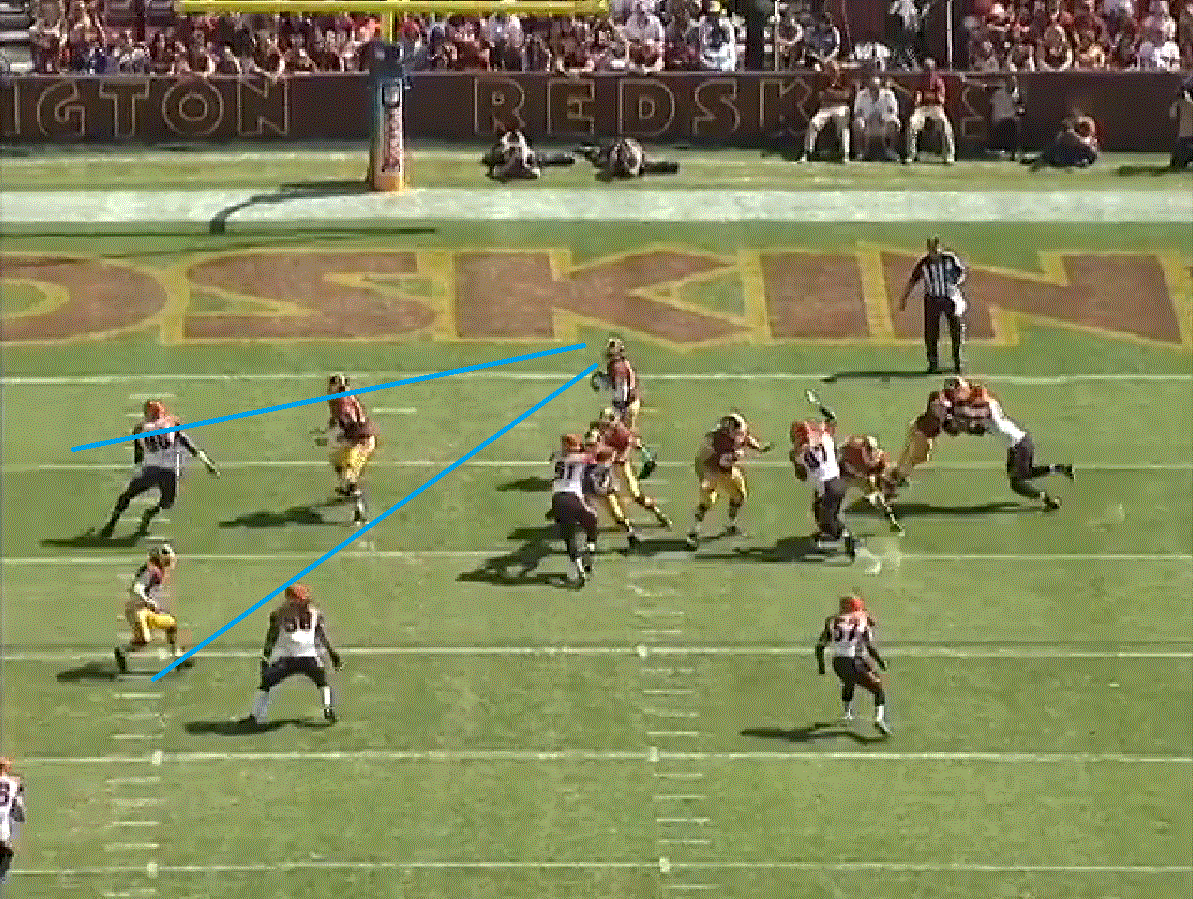
He looks only to the intended receiver pre-snap. After the snap he stares the receiver down before throwing.
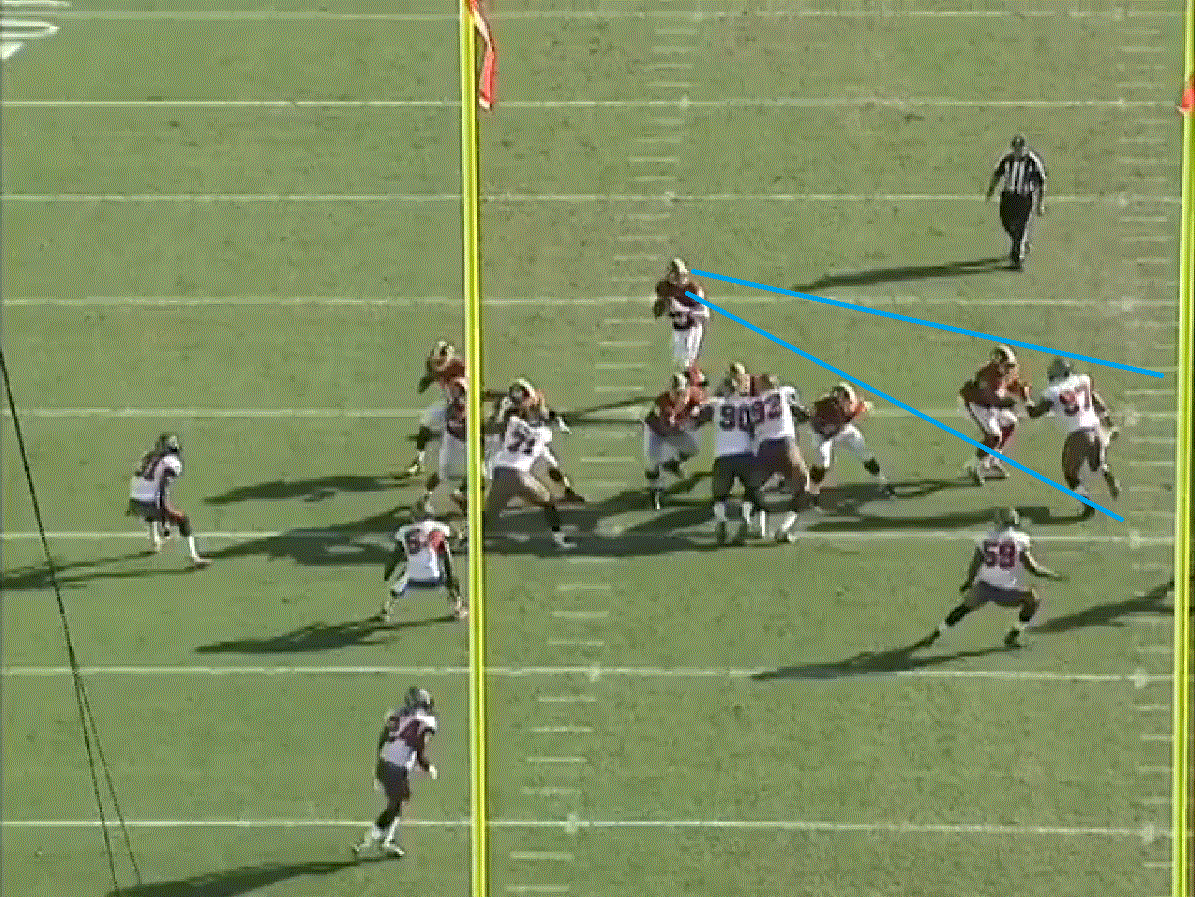
Staring, staring, staring, throw. Griffin doesn’t take his eyes off his first read before throwing. His typical “stare-down time” is 2-3 seconds.
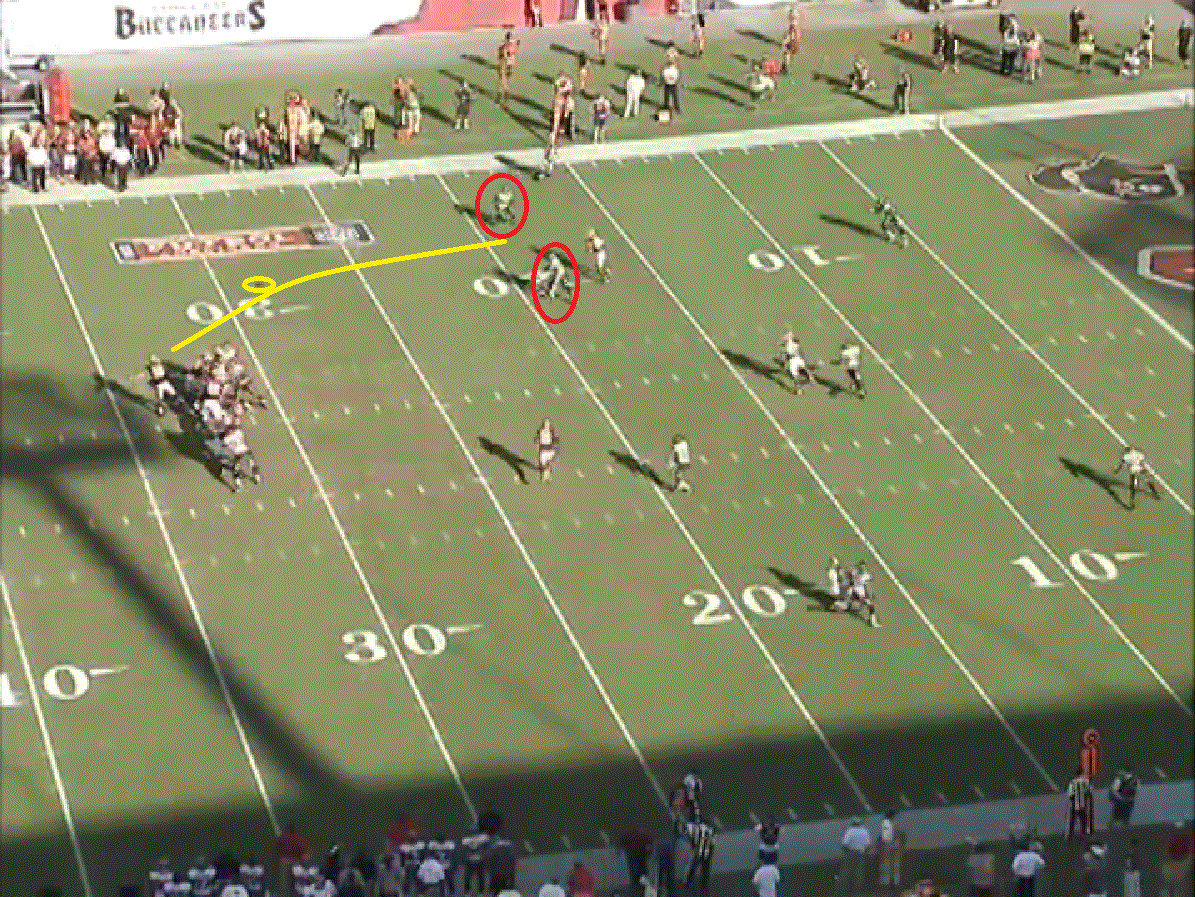
This play is an example of poor decision making. Griffin takes the snap, stares down the receiver, and delivers the ball. The simple stare-down is one issue, but his refusal or inability to move to another receiver or throw the ball away if the coverage is good is a much larger problem. The intended receiver is covered about as well as one can be, and Griffin delivers anyway.
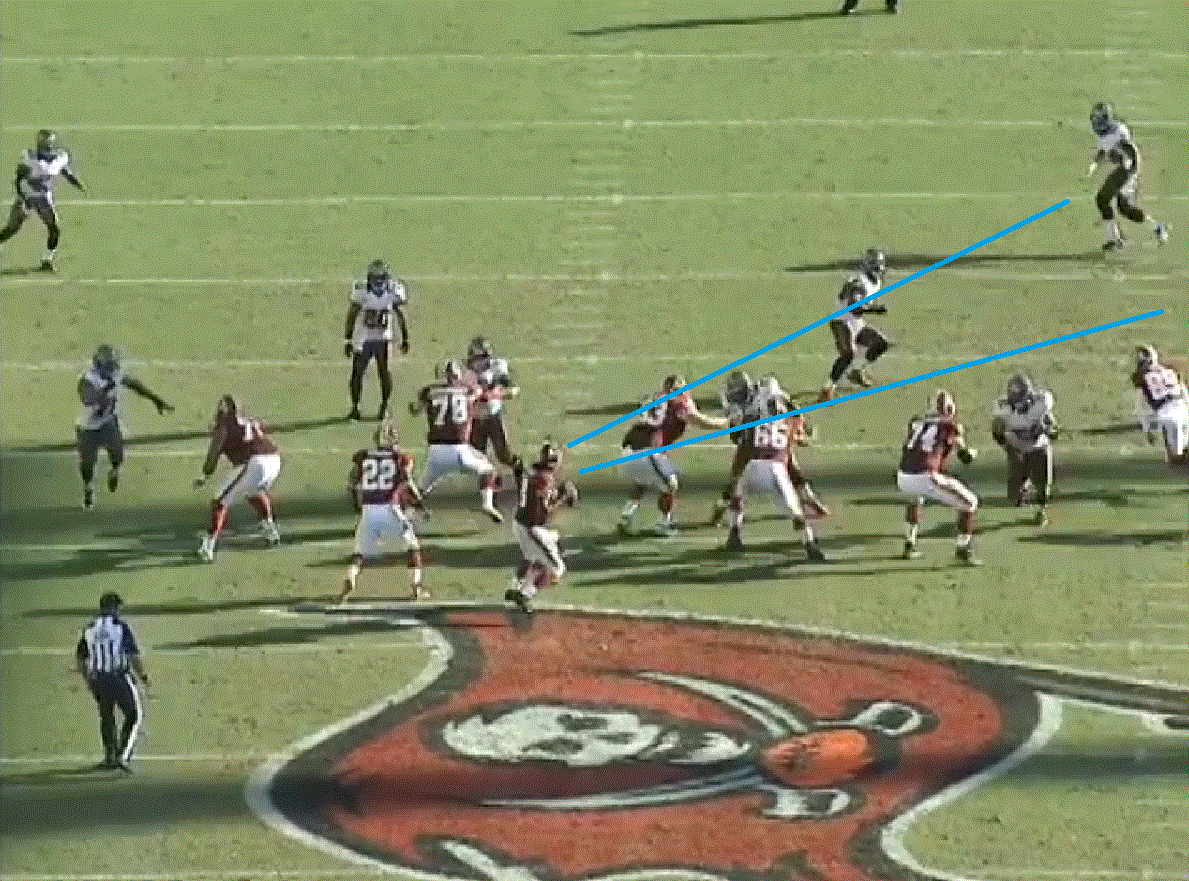
Staring, staring, staring…throw.
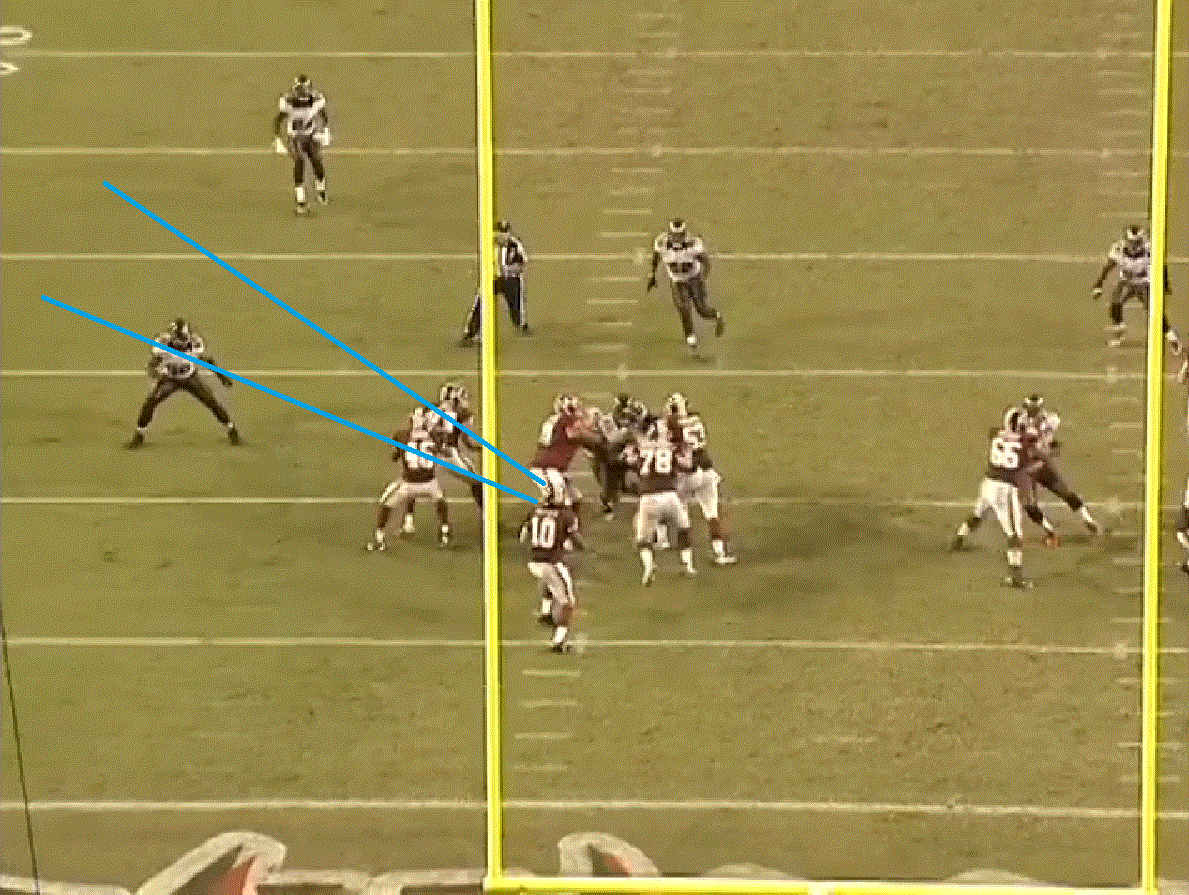
Here is another situation with good coverage. He stares, pumps several times, and dances around for three seconds before throwing the ball anyway.
Tunnel Vision Discussion
What’s the big deal with the tunnel vision? He’s still completing passes, so who cares?
What we are seeing before our very eyes are teams taking notes, and making corrections. Opposing defenses have not seen the Shanihaned-Griffin before, and since they haven’t had enough games to scout they were playing Griffin based on what they perceived the threats to be. With each passing game, Griffin’s weaknesses are going to become more of a liability.
I expect a plateau or decline in his performance in the coming weeks until he develops more as a passer in this league. This will result in more interceptions, sacks, and tipped passes. This was evident in Week 5 against Atlanta.
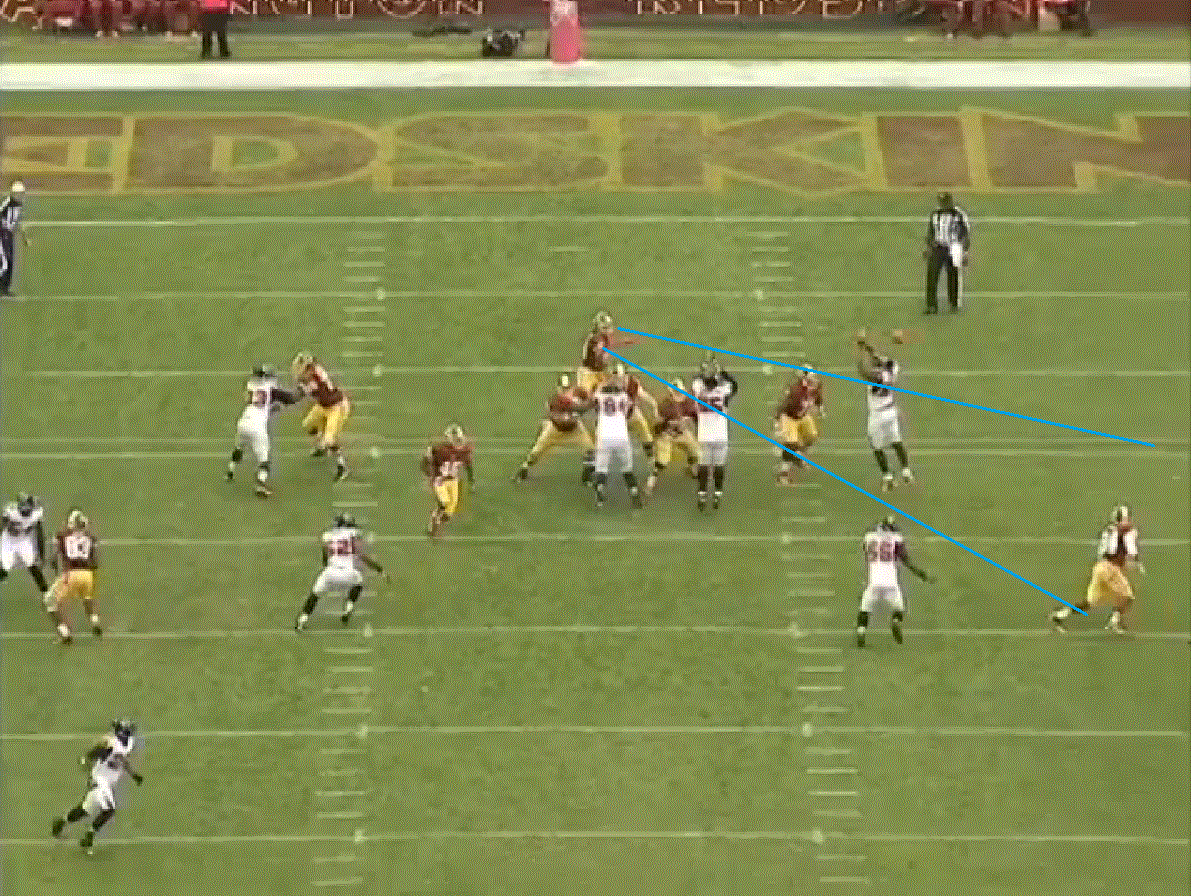
Griffin’s eyes once again go straight to the intended target post-snap. After staring him down, he throws the ball, which is easily tipped by the defense. I think we can expect to see more of these tipped passes in the future.
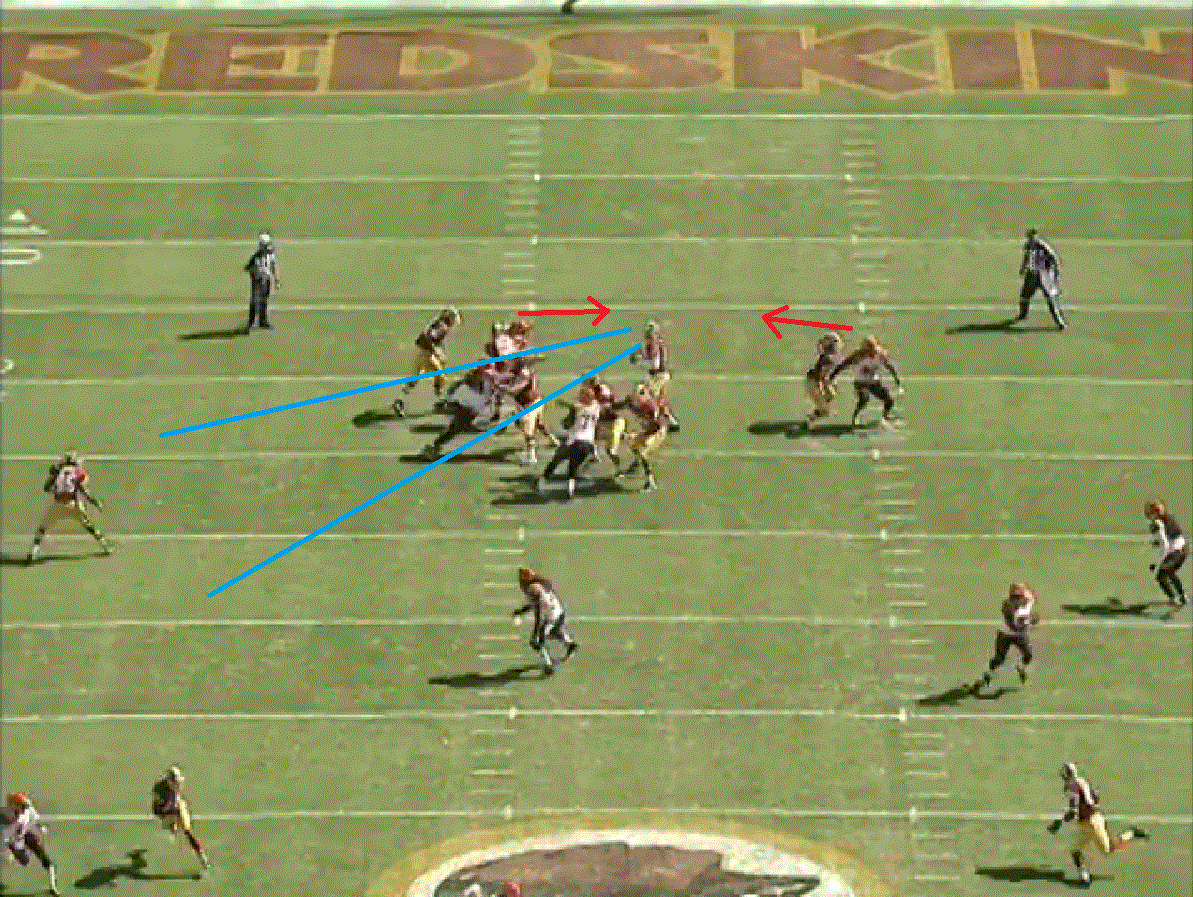
The above play exemplifies one of the more curious concerns with Griffin. There is something that I noticed in plays when Griffin took a sack, which I found compelling because it takes “tunnel vision” to a dangerous level. The above play shows a pocket closing on Griffin. Although he has a clear lane for escape, he does not sense the pressure or notice the lane at all. The right side of the field is completely dead to him. It doesn’t exist. Also, he is so involved in watching his intended receiver that he fails to feel or see the pressure coming and he is sacked for a loss.
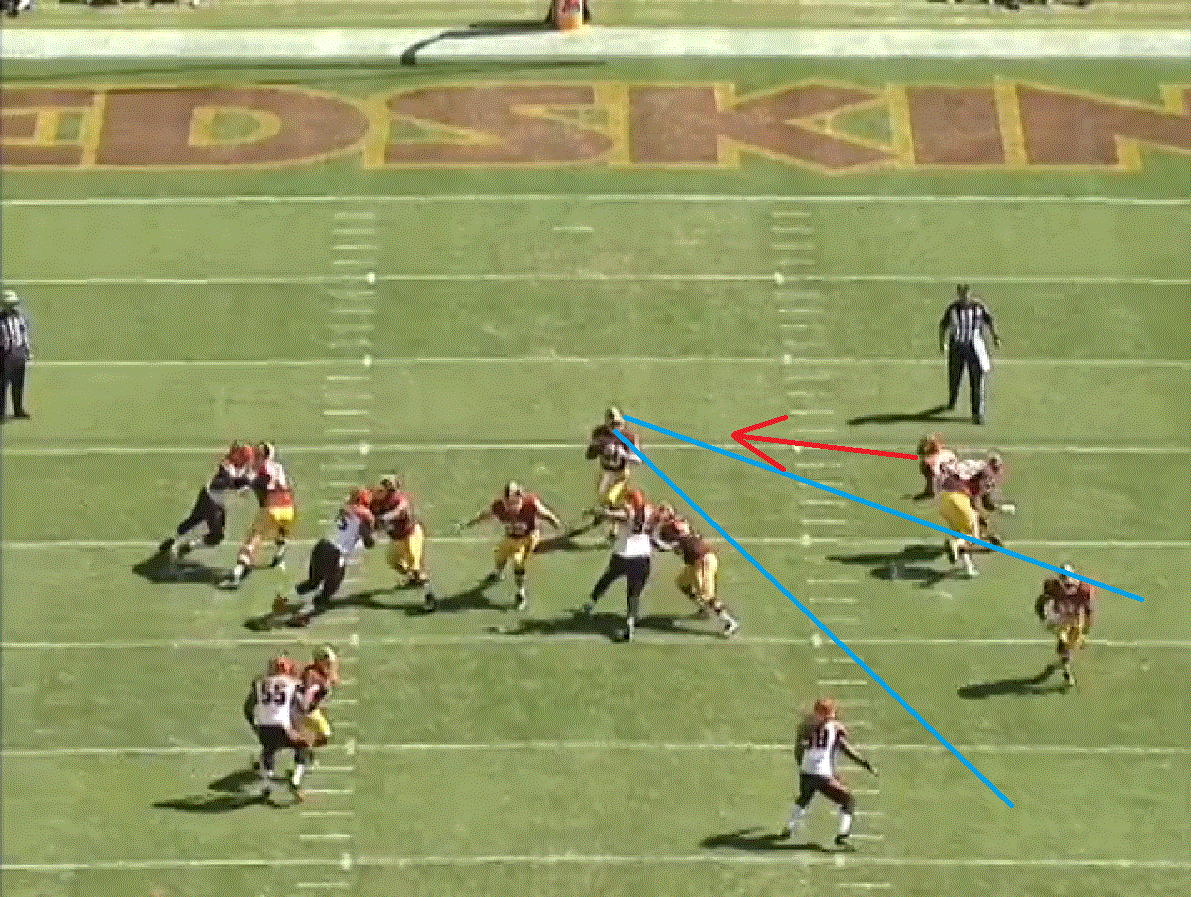
The above play shows Griffin once again staring down a receiver. On his periphery is the defensive end that intent on laying out Griffin. I cannot fathom the lack of vision that is taking place here. Griffin is not only staring at his receiver, but he so focused on the down field route that he lacks any sense of the impending threat. In this case he doesn’t even need to sense it because the threat is in clear view. Before the sack, Griffin does nothing to indicate he was aware of the defender. He takes a good hit, and fortunately gets back up.
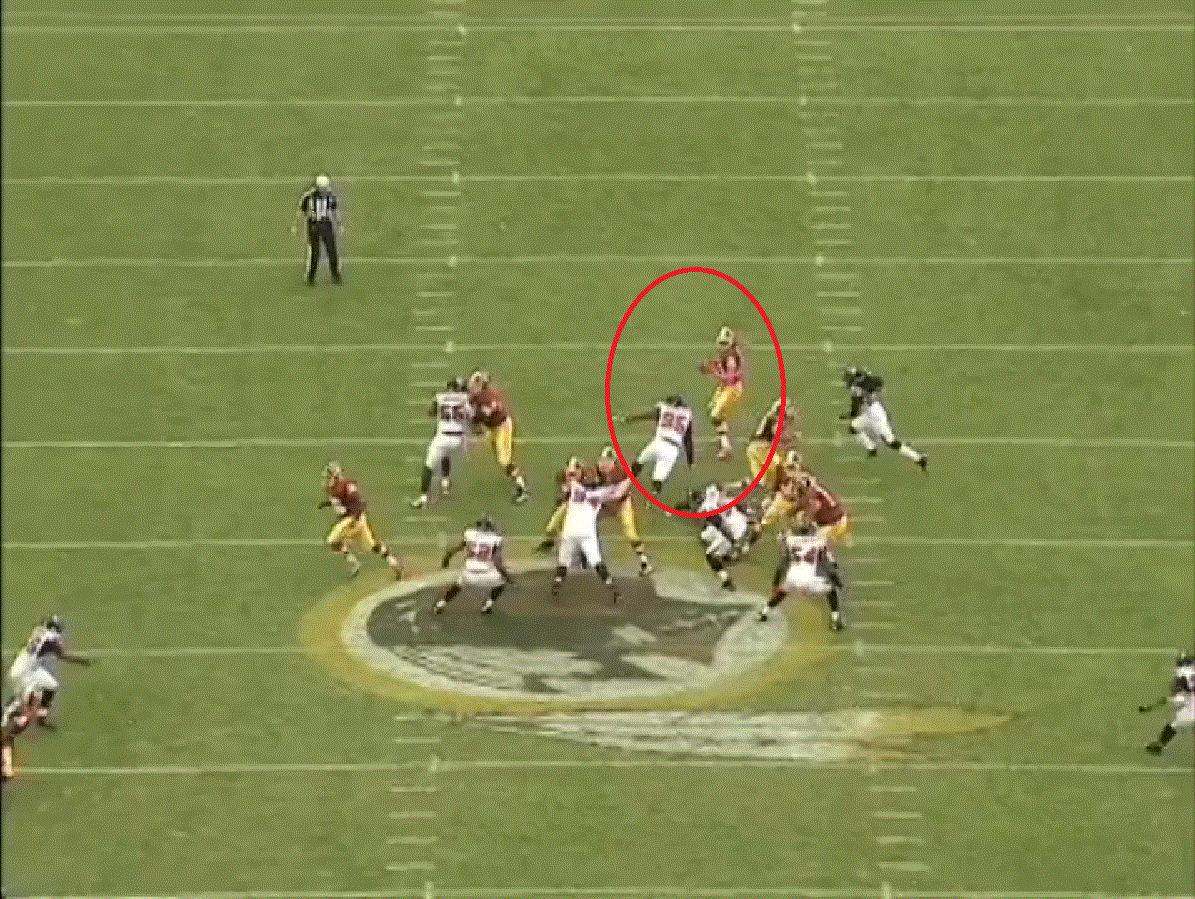
Here is Exhibit C. Griffin drops back and stares down his receiver. A cornerback is closing on the right, and a nose tackle is bearing down ahead. For the sake of this argument, let’s completely ignore the cornerback. Griffin could have read that threat better pre-snap, but it is ultimately a blindside hit. What is a gross concern is his complete lack of awareness of a 300-plus-pound nose tackle that is in his face. Griffin does nothing to indicate he senses the threat, and takes a powerful hit from both defenders simultaneously.
Defensive Adjustments
Defensive strategies will change and adjustments will be made based on past opponent’s success, or lack thereof. Case in point in the Week 4 contest versus the Buccaneers, Griffin had three runs inside Tampa Bay’s 10. This has been a recipe for success for Washington because of Griffin’s athletic ability. Tampa Bay was burned on the same play twice, but corrected to stop it the third time.
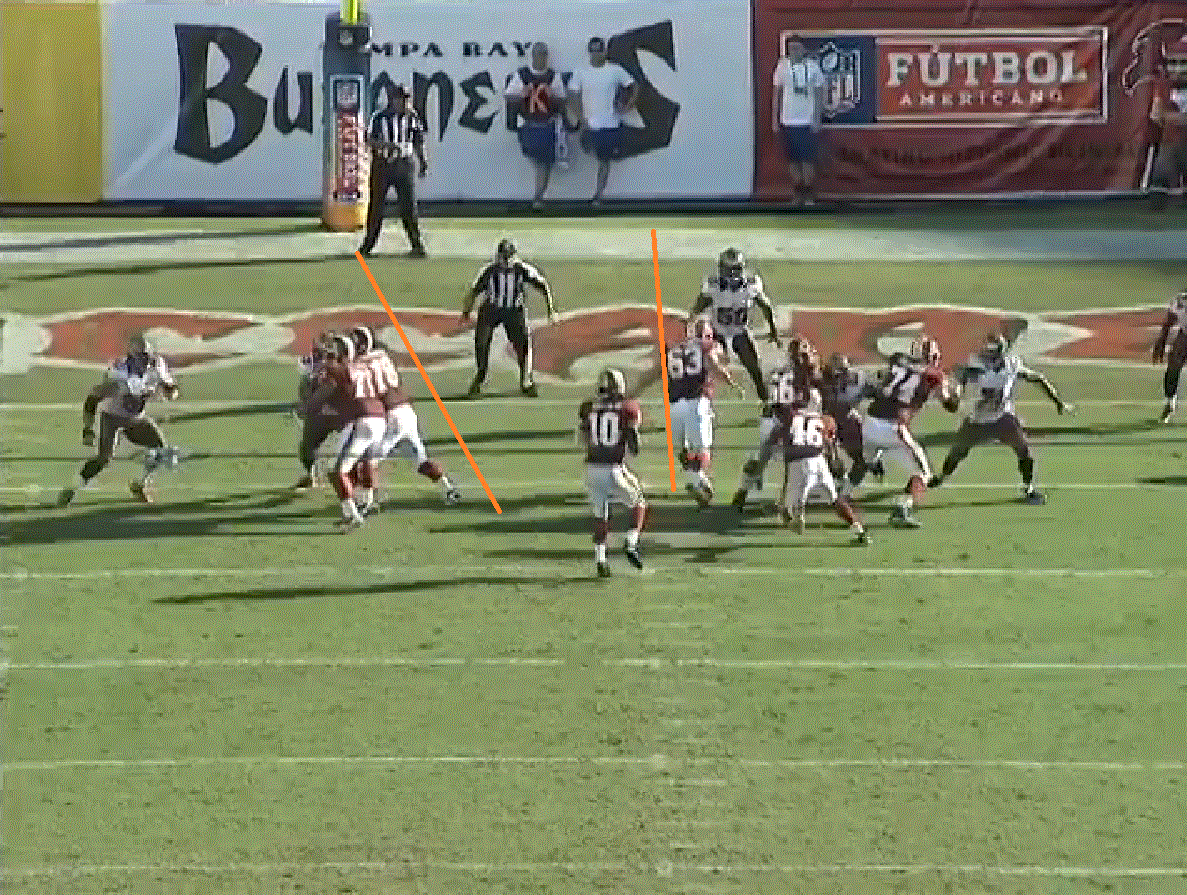
Quarterback draw. The offensive line pass blocks and invites the defenders to take an outside route. The result is a gaping channel for Griffin to trot through for a touchdown.
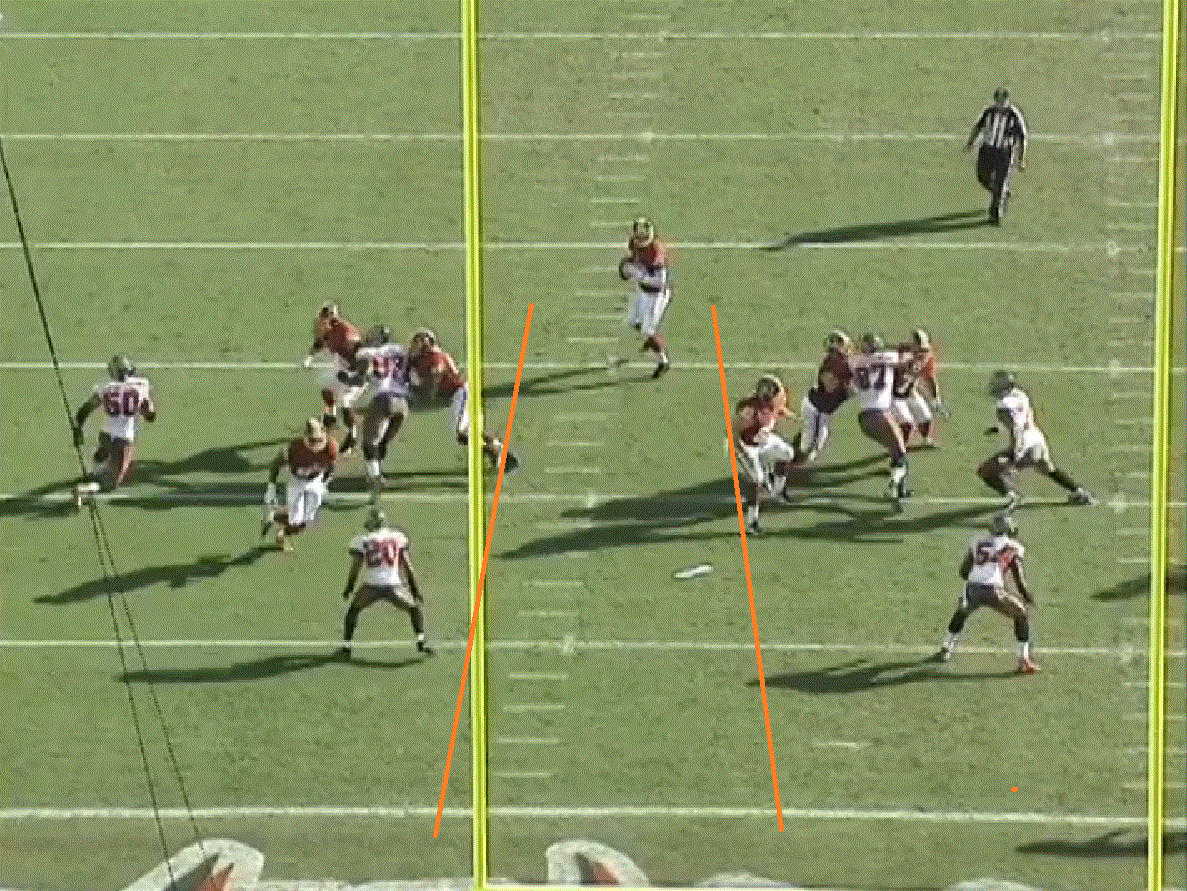
Quarterback draw. Once again, the offensive line pass blocks and guides the defenders to the outside. The result is another pleasant hole for Griffin to make his way through. Although Griffin fumbles, Pierre Garcon recovers it for the Washington touchdown.
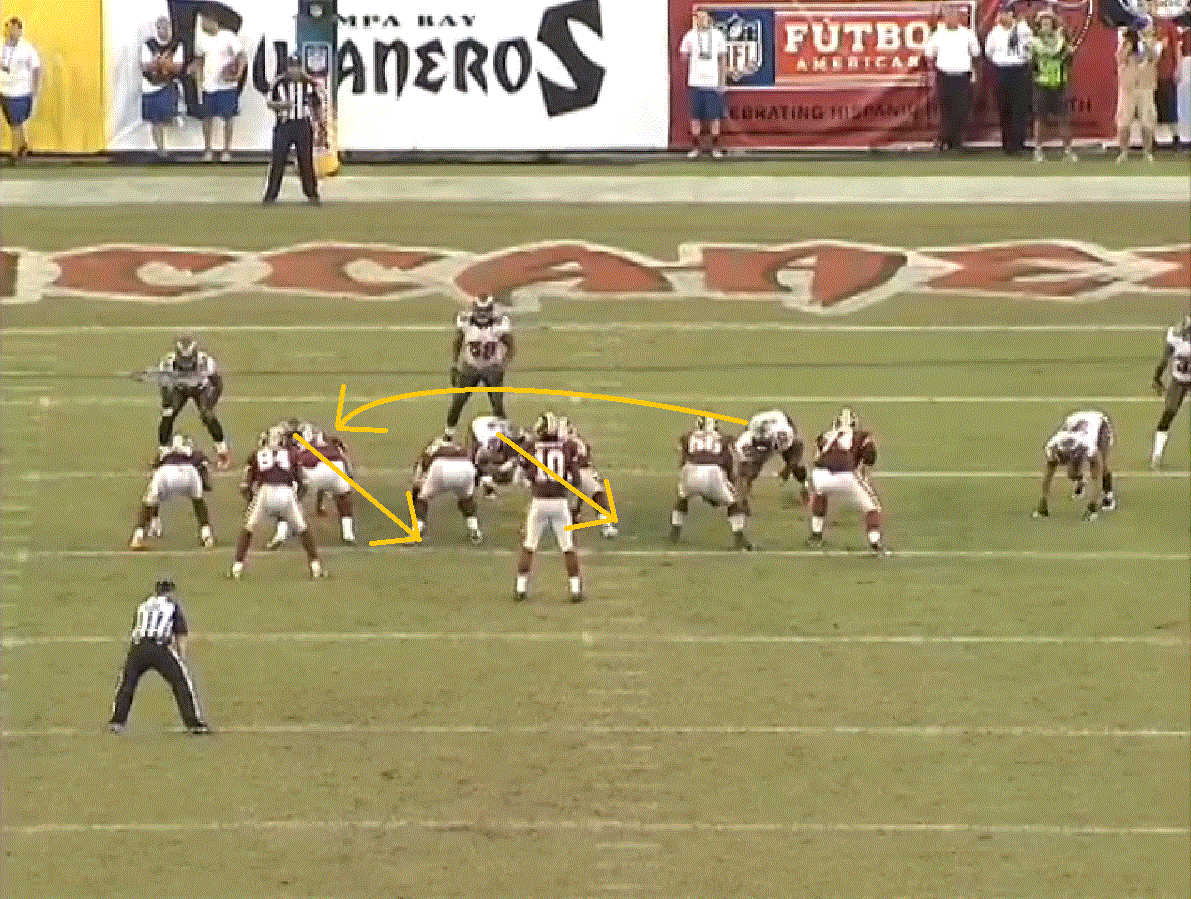
For a third and final time, the same draw play.
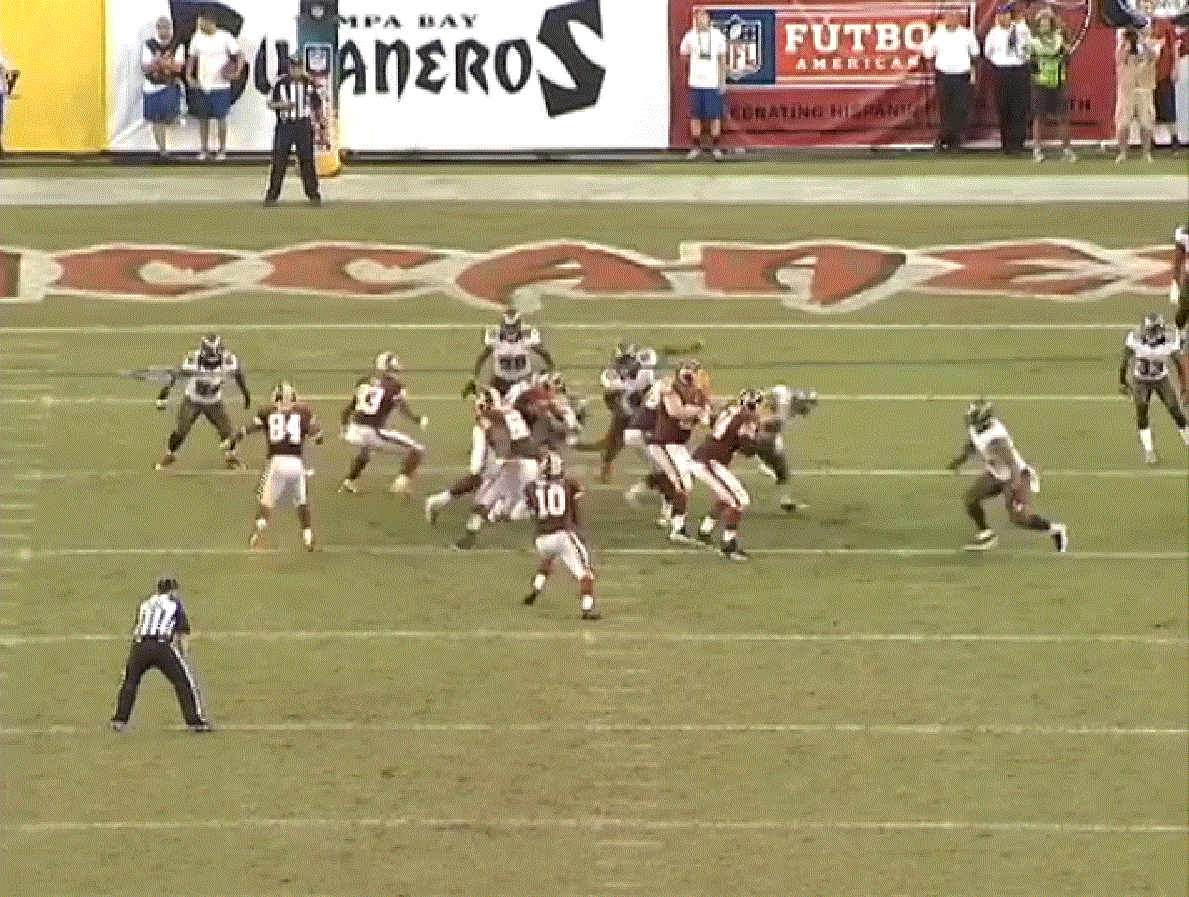
However, this time the defensive line jams across the line with a defensive end pulling from right to left. The result is enough confusion to eliminate any possibility of a hole developing. Griffin is then forced to bump it to the outside, and is greeted by defenders for no gain.
As outlined and illustrated above, Robert Griffin III has more than a handful of elements that need to be tweaked, adjusted, and acquired over the course of the season, and more likely into the next few seasons before he realizes his full potential. The success he has seen early this season will not continue throughout the year and one can already see a decline in play even if it isn’t evident in the box score just yet.
The depth of knowledge that he needs to consume is too much for him to increase or even continue his current success. The biggest question is how long can he sustain his physical health to get the needed time on the field to learn his craft? He needs to protect himself. Not just do a better job of it, but to begin protecting himself in a more fundamental way.
I am boggled by the degree to which he is locked onto one receiver. He needs to open his field of vision and see not only other potential targets, but the city bus zeroing in on him. I am excited to see Griffin in the NFL and anticipate further development over the next few years. He is the next in a line of electric quarterbacks that bring a unique skill-set to the league. His talents are obvious, and his opportunity is there.
I just hope he gives himself the chance to capitalize on it.
Nathan Miller can be contacted at nathan@revelationsports.com or Twitter @eklektique1